
By Clinton Martin
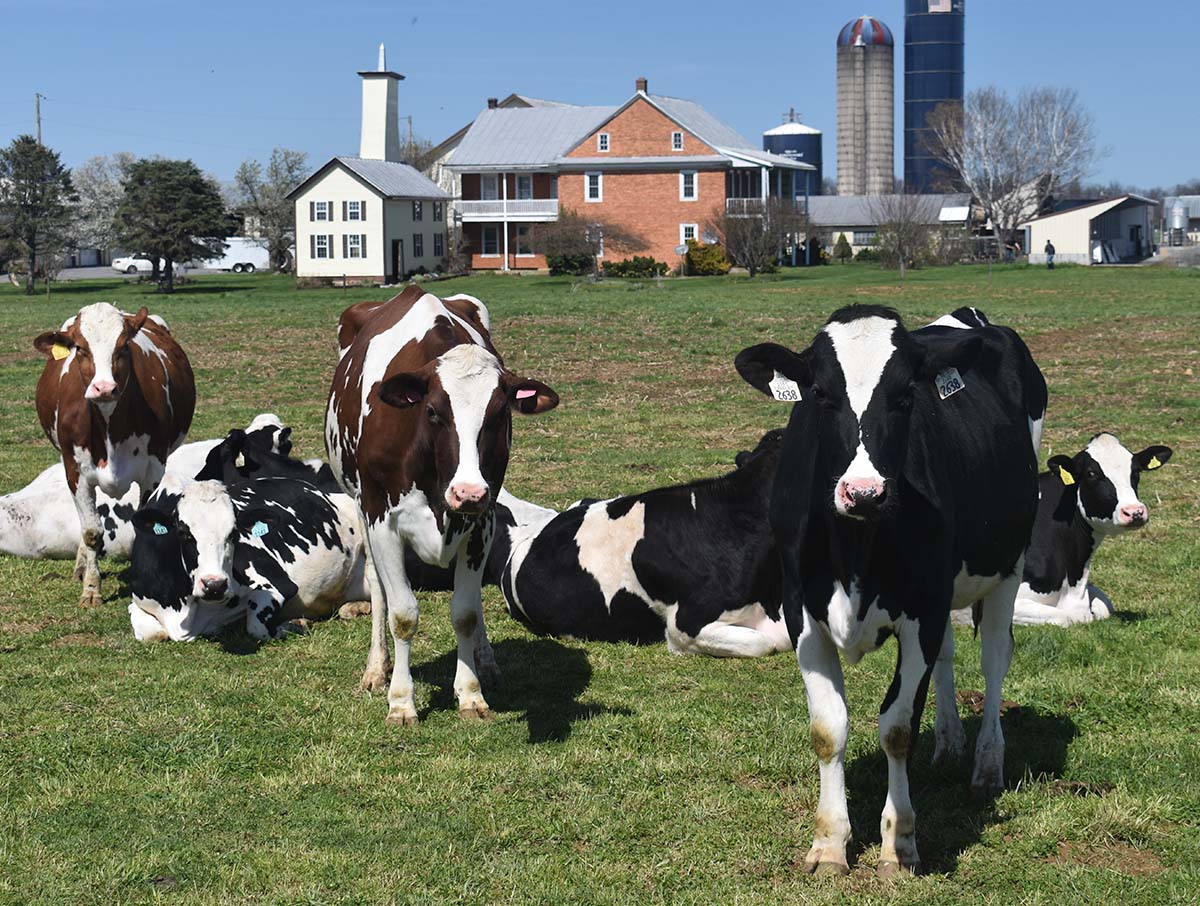
I’ve been to many dairy farms. Among local Amish farmers, you tend to see certain common denominators. You almost always find Holstein cows (those iconic black and white spots) chowing down on a diet of grain and other forage (often a mixture using molasses as a binder!) The milk gets deposited into a bulk tank, which stores the liquid, raw, unhomogenized milk until the tanker truck comes to pick it up and haul it off to a processing plant somewhere. The Amish farmer gets paid “by the hundred weight.” That means for every 100 pounds of milk delivered the farmer gets paid a set amount.
Holsteins produce more milk per day, per cow, than just about any other breed of cow. Feeding them a grain-based diet increases their milk production. The economics speak for themselves. That is why I was so surprised when I visited an Amish dairy farm recently that does everything differently. I met a man who had somewhat recently started a new dairy farm. That in itself is quite a feat. Starting a farm from scratch is very labor intensive and often requires large capital investments. It seems like that even among the Amish, new entrants into farming is becoming rarer every year.
He chose to raise and milk 100% grass-fed cows for his dairy operation. This was partially driven by upfront costs. It took far less money to get started with grass fed, as opposed to a traditional feed operation. For most of the year, the cows can simply live out on pasture, eating grass that grows naturally, with little intervention needed. During the winter months when the grass isn’t growing or is hidden under a blanket of snow for over two weeks (like this winter!) he feeds the cows’ grass in the form of hay he stored up for them.
His farm has 50 acres of tillable land, which is used almost exclusively to grow grass. Most winters he does have to buy in a little bit of hay, but he can produce almost all of what he needs right on the farm. His cows are Jersey breed, which are smaller than Holsteins, and are brown in color. They produce far less milk than Holsteins, but it is renowned for being much richer (superior butterfat and protein.) His farm is different in that he does not sell the liquid milk, in bulk, to a co-op or processor. Instead, he has a cream separator on site. He milks the cows once a day. (Most traditional Holstein farms milk twice a day. Some even milk three times daily.) After milking the cows, he runs the milk through the separator. The cream is removed, and what is left (skim milk) is discarded. The cream is what he sells. He has a contract with a company that sells the 100% grass-fed Jersey cow cream to various end users, so the cream is picked up twice a week from the farm. He doesn’t sell it directly to consumers on the farm.
What he does, sell direct to consumers on the farm free-range eggs. He has mobile chicken coops (“chick tractors”) that he moves around from place to place out in the fields. The chickens’ free range during the day and then go into the coop at night to keep safe from predators. That’s the most common problem for free-range chicken operations. Coyotes, foxes, raccoons, hawks, owls, even a neighbor’s dog can all wreak havoc on chickens. He said the chickens and the cows have no problem sharing pasture space. In fact, the chickens naturally seek out bugs to eat, especially loving flies when they are in their larval form. So, it is likely that chickens, in among the cows, help keep fly populations at bay, which then lessens stress on the cows, which then increases milk production.
I had said earlier that the skim milk is discarded. This isn’t completely accurate. Some of it is put to use as slop for hogs. The farm has pigs as a side business, nothing major at this time, but that could grow. Pigs love chugging the skim milk. They are the ultimate omnivores.
Lastly, the family grows some “fancy vegetables” on the farm. A buyer comes and picks up the vegetables they grow and distributes them into the export market (he’s been told that some of his vegetables end up as far away as Mexico!) Among farmers, the term “Fancy Vegetables” often refers to unique, colorful, or gourmet produce such as Romanesco broccoli, rainbow carrots, or white asparagus.